

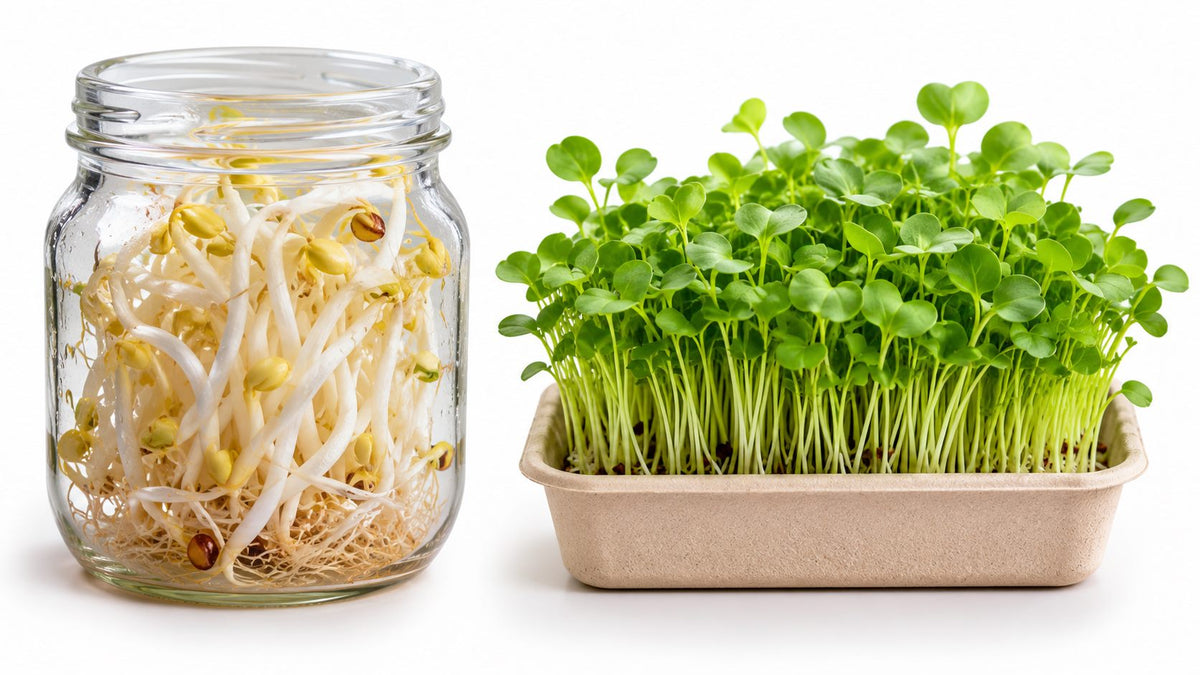

The key differences
| Broccoli sprouts | Broccoli microgreens | |
|---|---|---|
| Ready in | 3–5 days | 8–12 days |
| Grown | In a jar, rinsed twice a day | On a mat, in light |
| Eat | Whole, with seed and root | Stem and leaves |
| Taste | Slightly radishy, watery | Fresh, mild, leafy |
| Food-safety risk | Higher | Lower |
What the research says
Gram for gram, 3-day-old sprouts contain the highest concentration of glucoraphanin, the sulforaphane precursor. Microgreens still contain much more than mature broccoli, plus vitamins and chlorophyll built up through photosynthesis. Read broccoli microgreens and sulforaphane.
Which should I choose?
Choose sprouts if you want maximum glucoraphanin and don't mind rinsing a jar twice a day. Choose microgreens for better flavour, more versatility in the kitchen and lower food-safety risk. Grow them with broccoli seeds — see the broccoli microgreens guide.
Read also: microgreens vs sprouts · are microgreens safe?
Frequently asked questions
Are broccoli sprouts or microgreens healthier?
Sprouts have the highest glucoraphanin per gram; microgreens offer more vitamins, flavour and lower food-safety risk. Both are excellent.